

There are many different shapes and sizes of windows, and some present more of a challenge than others when it comes to treating them. With any window, you first need to know what you are trying to accomplish - adding softness and pattern to a room, framing a view, providing privacy or light control or all of the above! Transom windows, arched windows, Palladian windows, dormers and cathedral ceilings and unusual rooflines all add to the conundrum. With difficult children, you can always send them to ‘time out’ and hope they eventually outgrow their challenging nature - with difficult windows, not so much.
It seems like everything built in the 1980’s and 90’s included arch topped windows - these are a more recent take on the historic Palladian window popularized in English architecture in the 17th and 18th century and named after 16th century Italian architect, Andrea Palladio who used the motif liberally. A true Palladian window is comprised of a center arched window flanked by two shorter, narrower windows with squared tops. Okay, that might have been more information that you wanted to know, but not all windows with an arched top qualify as Palladian windows. And while arch topped windows, whatever name you call them, are very pretty, they are a bit of a puzzle when it comes to figuring out how to hang window treatments for them. Palladian windows are the grandaddy of difficult windows.
Draperies for Palladian windows
In the beautiful master bedroom in this article, the immensely talented Victoria Hagan has a great solution for an arched door flanked by sidelights creating the feel of a Palladian shaped window. The trio of rods roughly follows the window heights to highlight the architectural element while maintaining an understated elegance.
Another alternative, if the ceiling lines allow, is to use one straight rod across the entire span at the height of the tallest portion of the center window.
Draperies for arch-topped windows
For plain arch topped windows (without the Palladian sidelights), usually a straight rod at the peak is the best solution - the best examples use a straight skinny metal rod with straight floor length panels hung from rings.
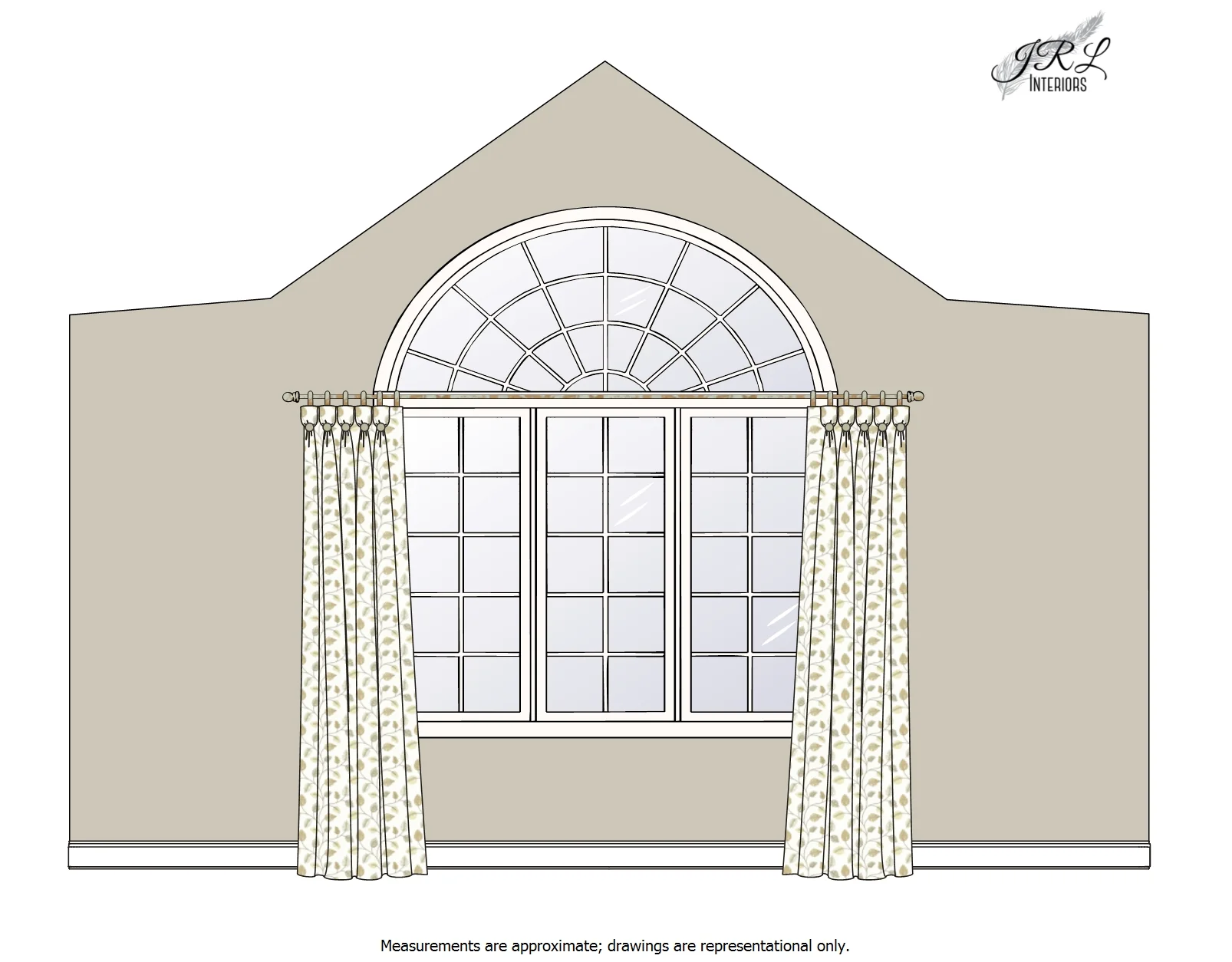
The arched window below was a design dilemma we encountered in a project. The ceiling angles prohibited using a straight rod above the highest point of the arch as would be ideal. The solution we arrived at, was to create the illusion of a Palladian triple window by hanging the rod below the arched transom window and extending it beyond the window on both sides. Generally, I would never advocate for hanging draperies below a transom, but in this case it was the solution that worked best and gave us the clean classic look we were after. The drapery rod was a custom made skinny metal rod with rings and simple ball finials in a French silver finish, and the panels were faced in a white linen embroidered in a taupe leaf pattern.

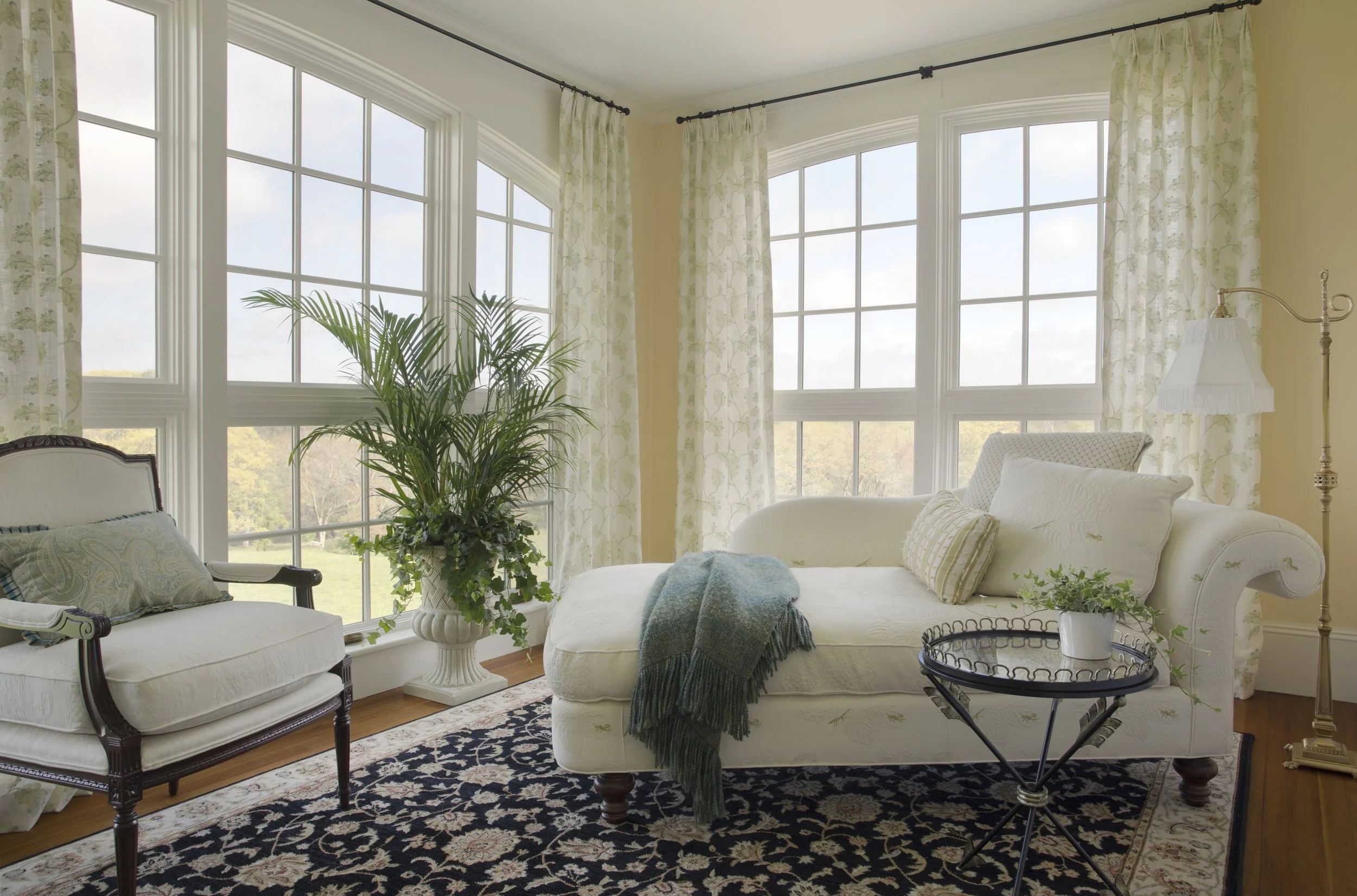
These windows have a gentle arch but the millwork runs straight to the ceiling. The homeowner originally thought she wanted something more elaborate for these window, but these are only 2 of the 5 windows that run the length of this sunroom space, so a simple, classic design was called for. Here we used straight custom iron rods again, this time in black, along with unlined embroidered linen to allow light to filter through, keeping the whole room elegant and understated to let the architecture and the views shine!
And finally, another option for an arched window is a Roman shade where the top follows the curve of the window
Draperies for transom windows
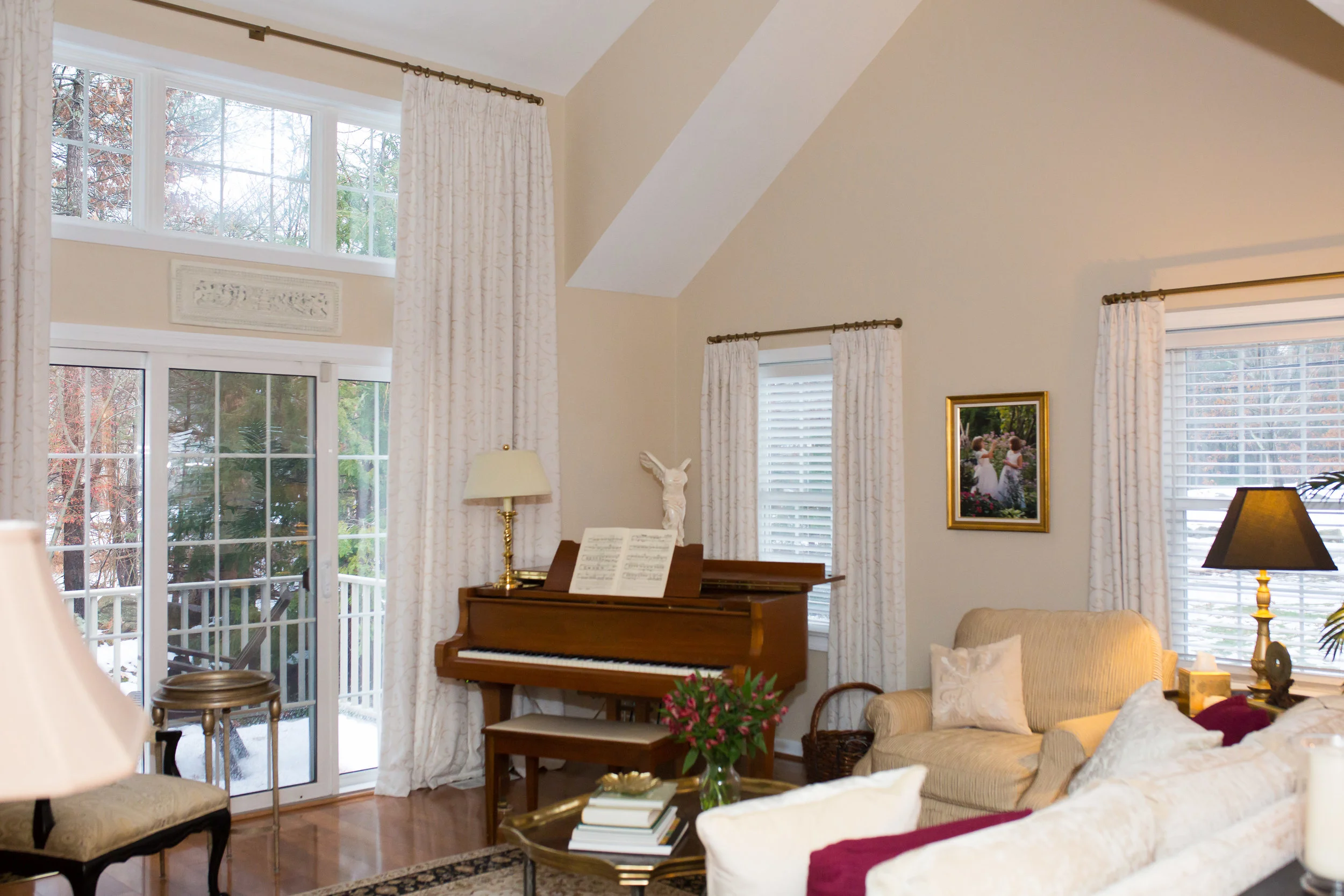
When a window or door is topped with a transom window and you are using draperies, always hang the rod above the transom window unless there is some overriding reason you cannot. Here, hanging the rod above the transom emphasizes the height and the dramatic focal point of the room. These panels are an embroidered linen in a tone on tone organic pattern and are hung on custom antique gold finish French curved rods. NOTE: It is really important to use enough fabric when creating tall panels - these are double width panels even though they are not meant to ever close, as anything narrower would look too skimpy with that height.
There you have it - some classic solutions to windows that are ‘problem children’. Window treatments can be complicated, especially with non-standard window shapes and configurations. For tips on getting window treatments right check out THIS post. For how high is too high, read THIS post. And for deciding between custom and ready made see THIS post.


Don’t have the time or inclination to try to figure it all out and just want someone to do it right the first time? We live for this stuff - contact us!
XO,

*Please note that this page may contain affiliate links meaning that if you make a purchase, I might make a small commission at no extra charge to you.